Star mounds (fetu ma’a or tia ave). The name itself evokes the sky and mystery. A mound made of stars? How could that be?
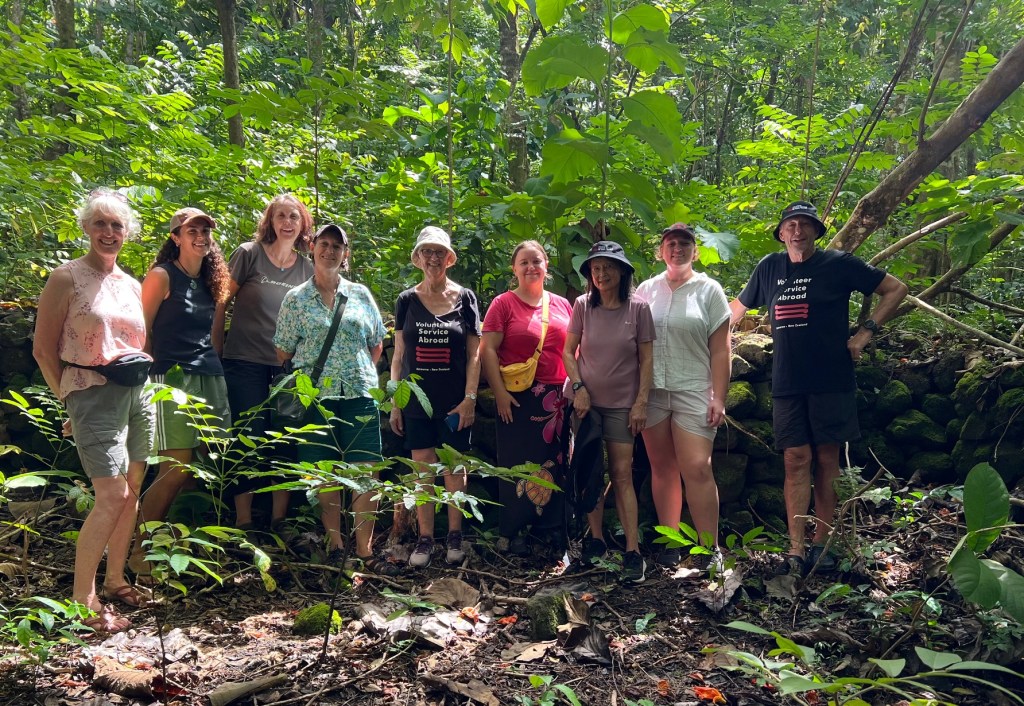
Star mounds are a real life mystery that have perplexed archaeologists and other scientists here in Samoa. It’s not every day that I learn about a real life mystery. But this past weekend, that’s exactly what happened. I was invited and then accompanied a few New Zealand volunteers and a US archaeologist named Greg Jackmond to a well-researched, yet still mysterious, star mound on the Malaefono Plantation
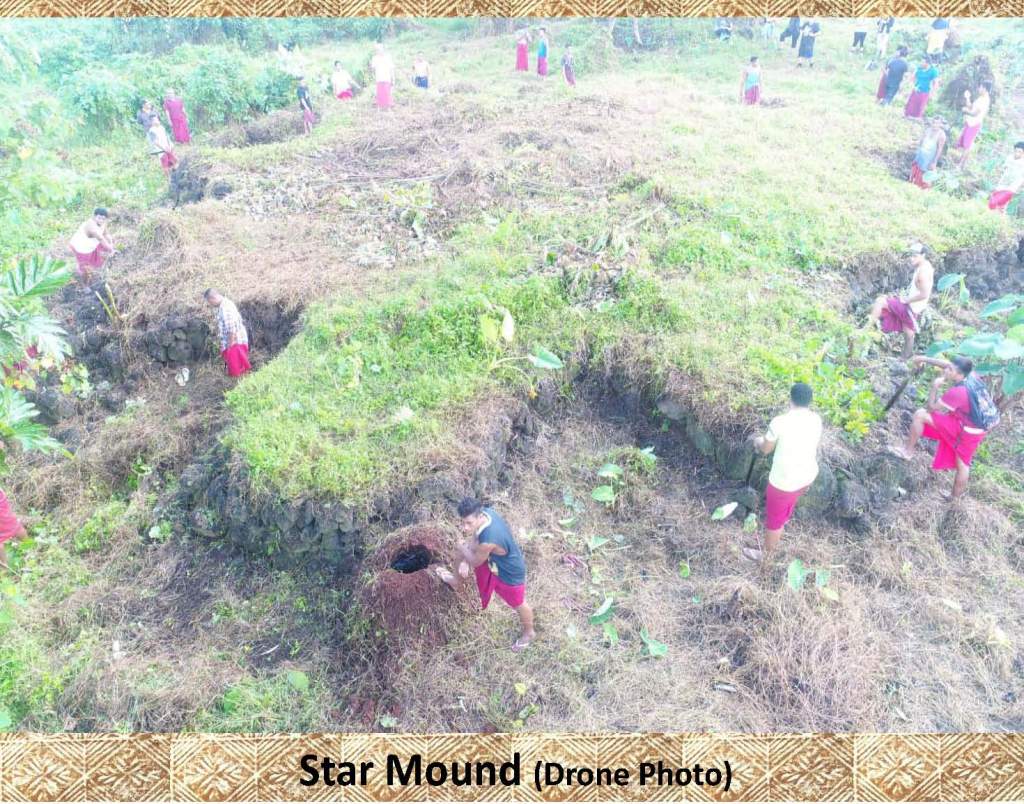
There are more than 300 star mounds across the islands that make up Samoa, most found in deep inland forests away from the coast and no one knows why they were created or by whom. They are flat platforms made of rock or soil or a combination of rock and soil and occur in a star or cog shape; some have five ‘arms’, some have eight, and some even have eleven. They are usually between 15 to 20 metres wide and can be anywhere from tens of centimetres tall to a metre or more.
Located about half an hour’s drive west from Apia, the star mound we visited stands in the middle of the jungle. Without the help of LiDAR (Light Detection and Ranging), we would have never known there was a star mound just metres from where we parked alongside the road.
LiDAR is a remote sensing method that uses light in the form of a pulsed laser to measure distances and create 3D representations of objects and environments. It works by emitting laser beams and measuring the time it takes for the light to return to the sensor, which is then used to calculate distances and create detailed 3D models. LiDAR is used in various applications, including mapping, environmental monitoring, autonomous vehicles, and more. It allows scientists to see through vegetation, exposing the archaeological features that may lie underneath.
The LiDAR data for Samoa that has been analysed shows that the islands of Samoa are covered with archaeological features from the coast to as far inland as can be seen where the deep forest canopy has been cleared (8 km or more inland in some areas).
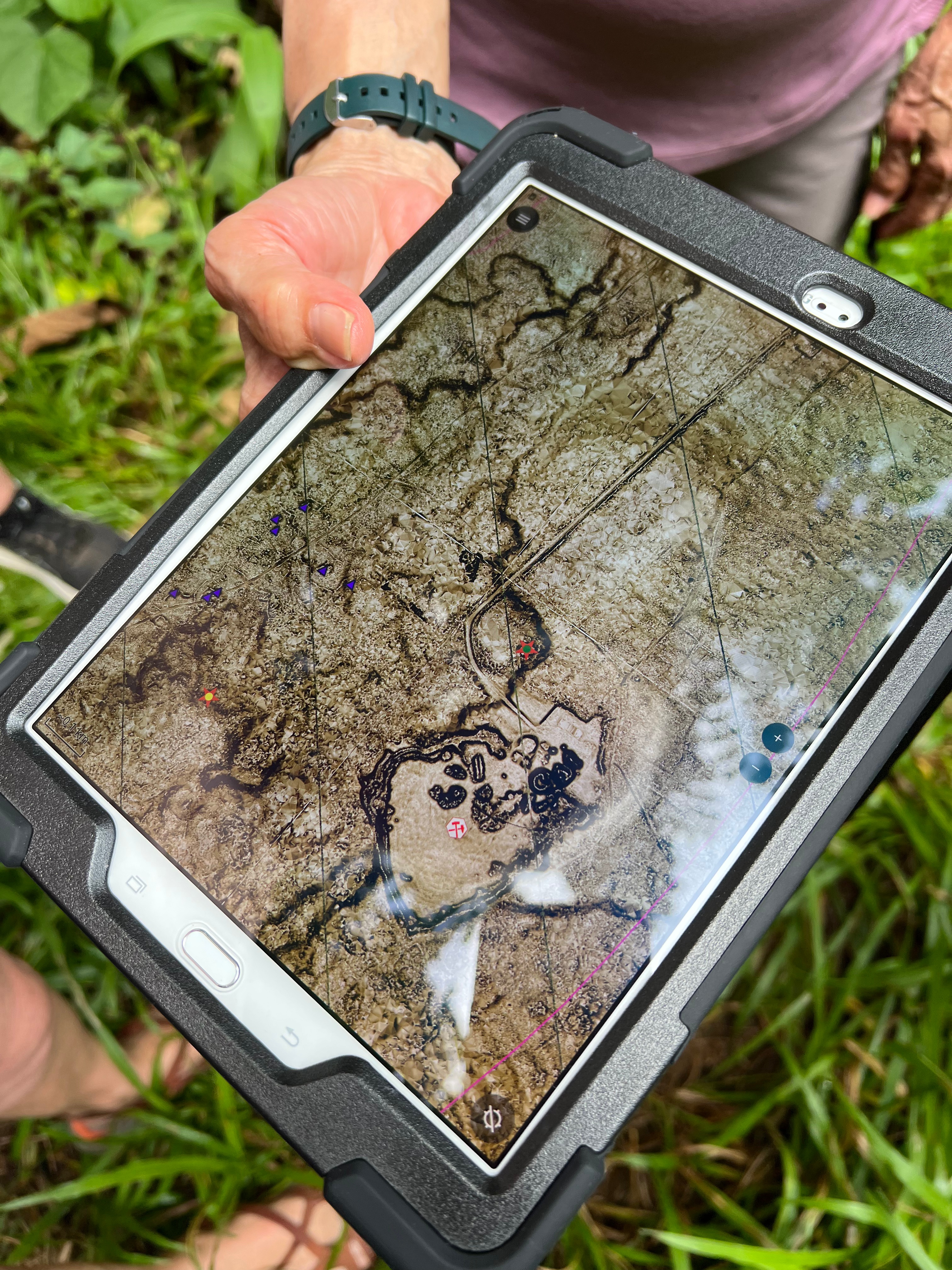
The features that can be seen on a LiDAR map of Samoa include platforms for houses [tulagafale], star mounds [fetu ma’a), terraces [mafola], walls [pa ma’a], walled walkways [auala savali], elevated walkways [auala savali], large earth ovens (umu ele’ele or umu ti ), drainage channels [omo], large pits (lua’i masi), forts (olo), and just piles of stone [mauga ma’a]. (this information has all been taken from Greg’s webpage where you can discover more, https://nus.edu.ws/ACH/MapServer/tutor/starmound.html).
Greg has been studying star mounds and other features of the Samoan landscape since first coming here as a Peace Corps volunteer in 1979. He is incredibly knowledgeable and was happy to share some of his knowledge with all of us fascinated novices.
He showed us his LiDAR map of the area and pointed out the nearby star mound to us. With the LiDAR images, it was quite clear where the structure was. When we looked out at the jungle we had no idea it was there.
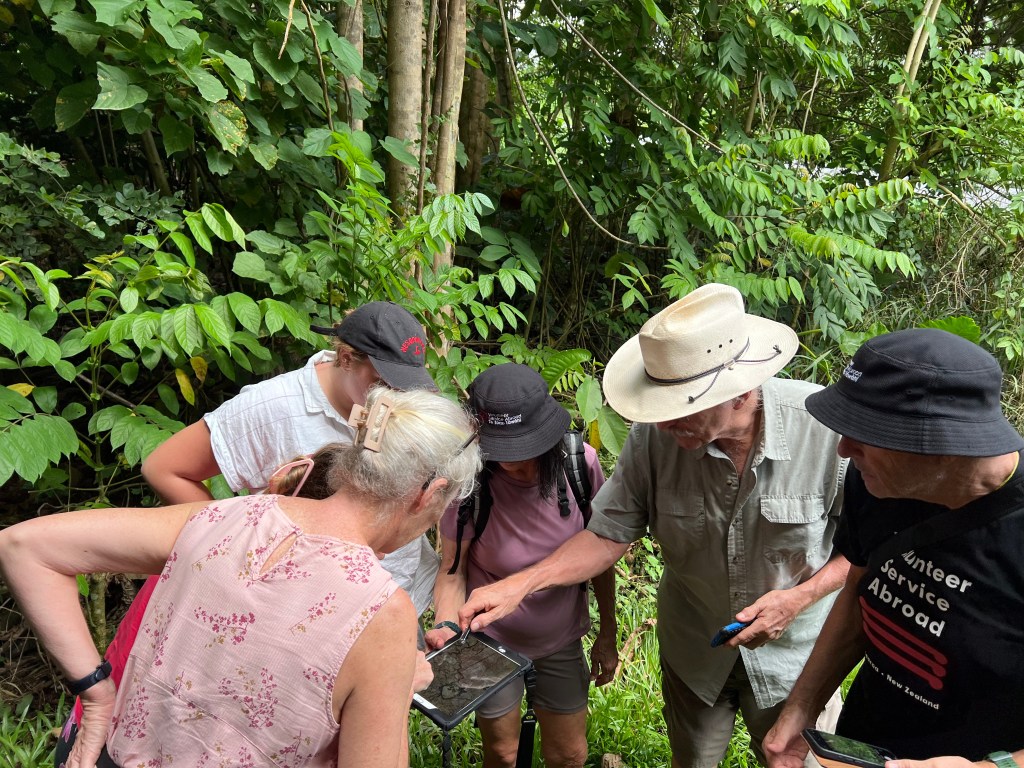
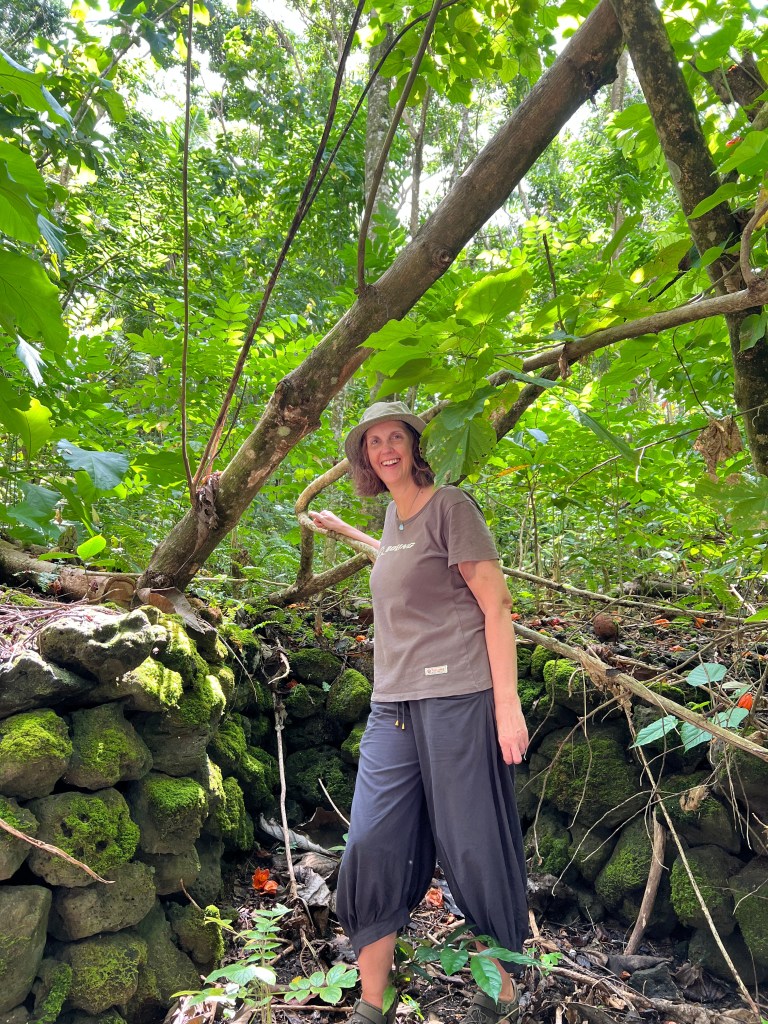
We followed Greg’s map, fighting off the mozzies that swarmed around us. We only walked for a few minutes and we were able to see a raised platform ahead of us. It measures approximately 26 x 22 m and has eight arms. Since it’s located on a slope and the since the top is level, the height on the one side is around 50cm and the other is 130cm high. As we climbed over the structure it was obvious that it had been built by someone. The basalt rocks along the sides of the platform were orderly, though mossy. The landscape indicates a stream flowed past the structure in the past. Now it’s a forest of coconuts, both in the trees and on the ground.

Greg said that when he originally had studied this particular mound, the researchers and local people had cleared the mound and the surrounding area. I later found a photo of it, cleared, online. In the intervening years, the forest has reclaimed the star mound as its own.
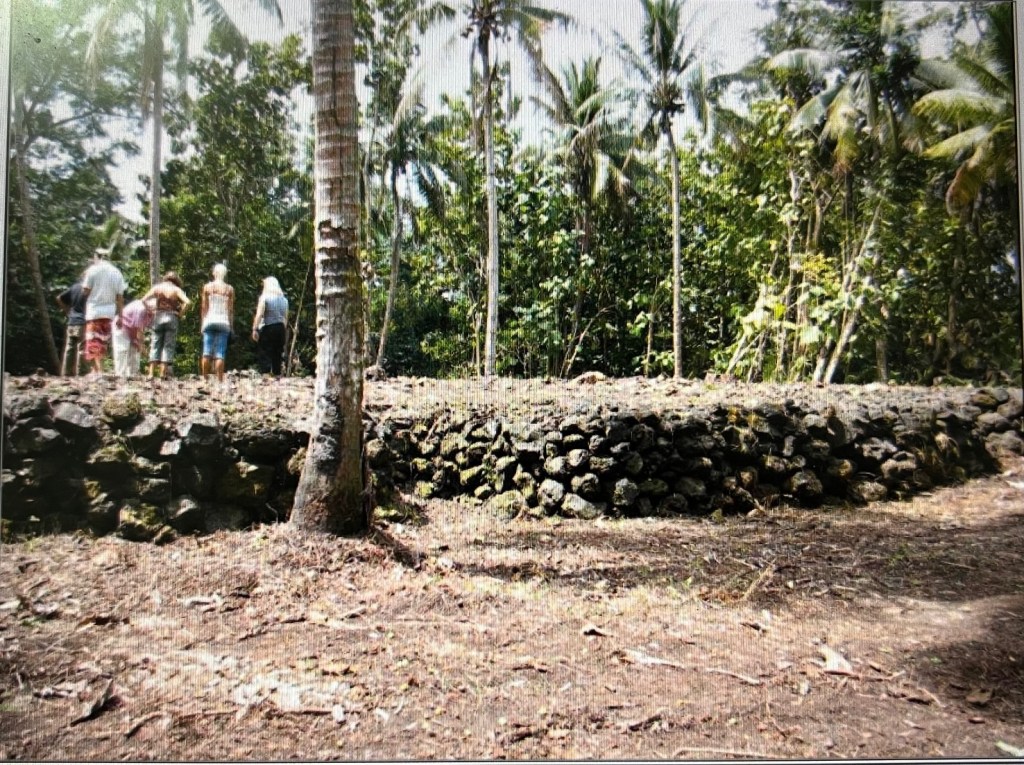
There is evidence to suggest that mound building has occurred in Samoa from c. 1100 AD but star mounds only exist from the last 300 years.
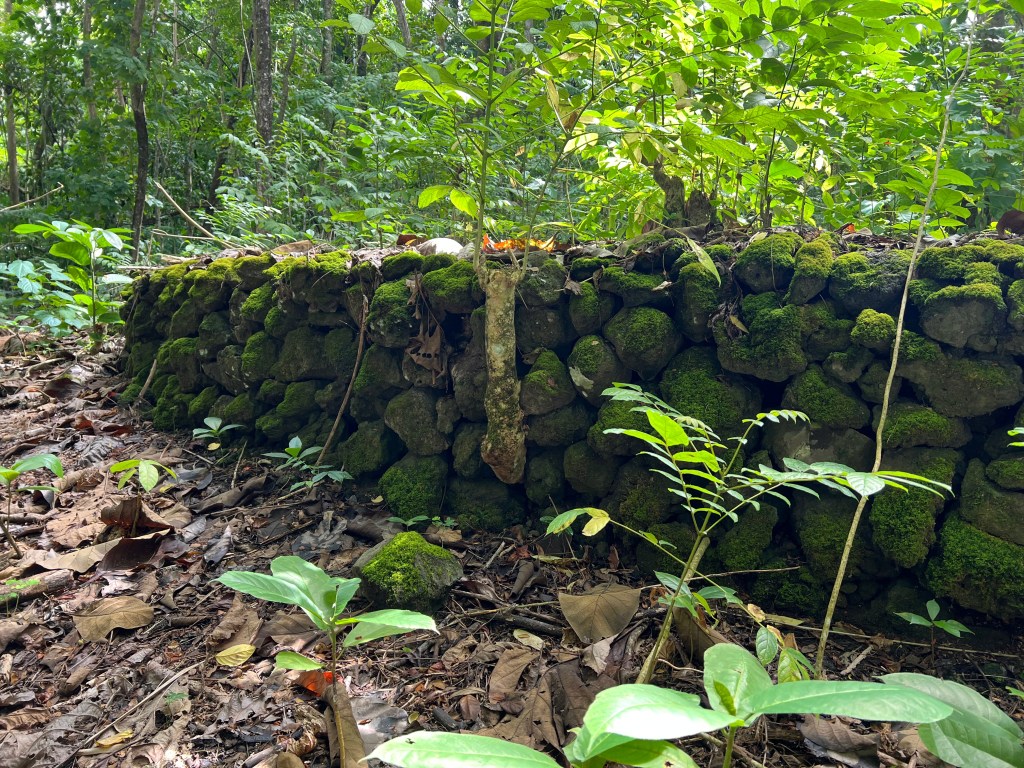
No one knows why star mounds exist. Theories range from being a place of traditional rituals to a place where chiefs (matai) would hunt pigeons. With more than 300 scattered across the islands, it seems that they were important – whatever their purpose.
Are they burial mounds, residential structures, inland fortifications, territorial markers or sites for ritual divination? The pigeon hunting idea took hold because it was part of a traditional ritual for chiefs years ago. The problem is that since contact with the missionaries who came to Samoa in the 1830s, the star mounds have not been used for their traditional purpose and this traditional knowledge has been lost.
The forest and inland area could have been seen as a domain for the supernatural or for ritual purposes for the Samoans who built the star mounds. According to a paper published by David Herdrich in the Journal of the Polynesian Society in 1991, Samoan mythology supports the association of aitu (ghost or spirit) with the pigeon catching mounds and their forest locations place them in context with the supernatural. I don’t know if they all evoke feelings in those who visit, but this one felt slightly eerie to me.
Many (but not all) star mounds have eight ‘arms’. Eight is an important number in Polynesian cosmology in general and the traditional octopus (fe’e) with eight arms is important in the Samoan culture. The tale of the octopus who was the war god of A’ana Upolu and built the house of the octopus (O le fale-o-le-fe’e), could be a deity who assisted the hunters in their attempts to catch the pigeons.
But no one knows for sure.
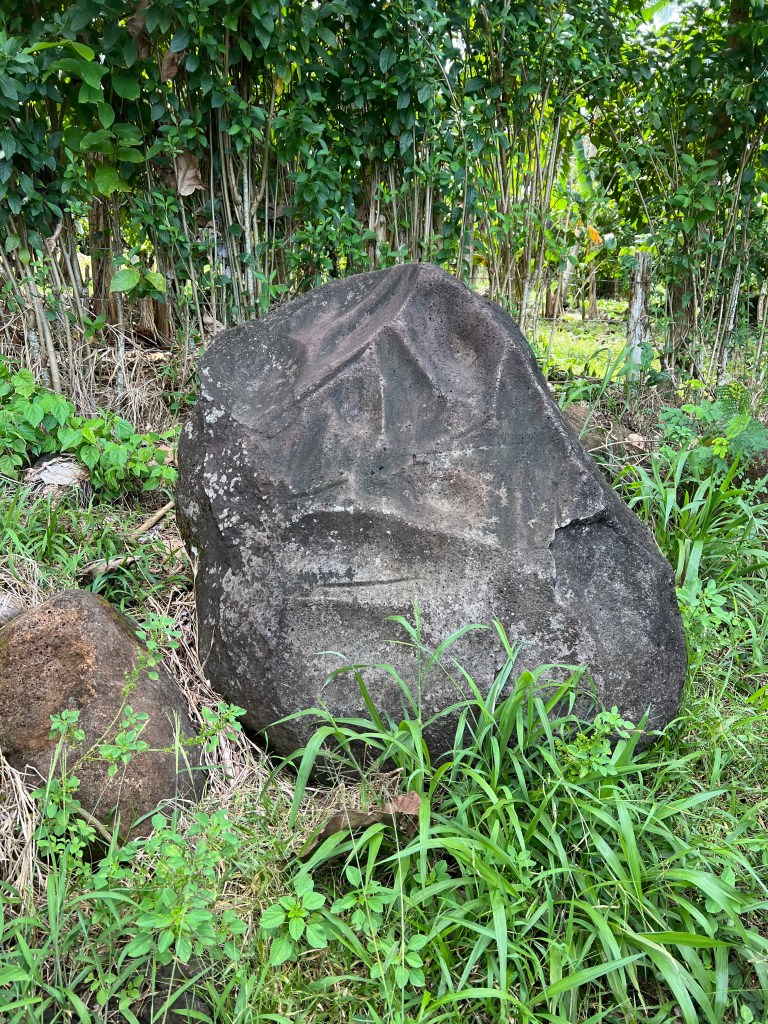
Once we had our fill of photos and questions and had given blood to the forest mozzies, we climbed back in our cars and headed towards the coast. Greg pulled over about a kilometre down the road and showed us this ancient foaga or grinding stone. He pointed out the long grooves where he believes they sharpened their spears for spearfishing. He has done further research on a village where almost all the stones on the beach are foaga – obviously an important fishing village at the time.
As I drove back to Apia, I was left with my thoughts and ideas of how and why these mysterious star mounds originated. It’s a conundrum that has captured many over the years and I look forward to seeing if I can discover more star mounds on my travels around the islands in coming months.
I’m very grateful to Greg Jackmond for allowing me to accompany this group and am grateful to the owners of the land who allowed us to visit their land to examine and photograph the star mound. And of course, I’m grateful to the Volunteer Services Abroad team who invited me to join them.
 Believing in Me
Leave a comment